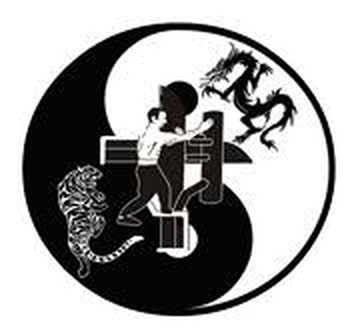
The short answer: Wing Chun can build timing, positioning, balance, awareness and composure at close range. Those qualities become practically useful only when training progresses beyond memorised movements into changing, appropriately resistant partner work. Avoidance, de-escalation and leaving safely remain more important than winning a confrontation.

What Wing Chun is trying to develop
Wing Chun is commonly practised as a close-range striking art. Students work on direct movement, protecting central lines, maintaining structure while moving, and using both hands in coordinated ways. Contact exercises such as Chi Sao can develop sensitivity to pressure and changes in position.
These are training qualities rather than promises. A person may perform a movement neatly in a cooperative drill yet struggle when distance, timing and intent change. The purpose of broader partner practice is to close that gap safely and progressively.
What determines whether training transfers?
Progressive resistance
A useful progression begins with enough cooperation to learn safely, then introduces uncertainty, movement, pressure and appropriate contact. Resistance should challenge a student without turning injury or fear into a measure of authenticity.
Range and unfamiliar problems
Close-range skill is only one part of a confrontation. Distance, clinching or grappling, hard surfaces, obstacles, surprise, weapons and more than one person can radically change the risk. A responsible school should be honest about what it practises and what it does not.
Physical and personal factors
Size, reach, strength, mobility, fitness, experience and stress responses remain relevant. Good technique may help a person use their body more effectively; it does not erase every physical disadvantage.
Potential strengths and important limits
Close-range organisation
Position, balance and direct handwork may be useful when space is limited.
Contact awareness
Partner drills can train responses to changing pressure when they remain connected to realistic movement.
Limit: drills are not encounters
Predictable sequences cannot reproduce every environment, intention or stress response.
Limit: no guaranteed outcome
No system makes a person invulnerable, particularly against weapons, multiple people or an unexpected assault.
Awareness, boundaries and de-escalation
Practical self-defence begins before physical contact where possible. Notice exits, create distance, use clear verbal boundaries, seek help and leave rather than escalating a contest. Physical action may be unavoidable in some circumstances, but it should never be presented as the preferred or certain solution.
Scenario discussions can help students recognise that protecting another person, moving through a crowded place or facing an apparent weapon involves different decisions. This article does not provide weapon-defence instructions.
Victorian self-defence law: a general note
Section 322K of Victoria's Crimes Act 1958 states that conduct is carried out in self-defence where the person believes it is necessary in self-defence and the conduct is a reasonable response in the circumstances as the person perceives them. The application of that test is fact-specific.
How to assess a Wing Chun school
- Ask how students progress from cooperative practice to changing resistance.
- Observe whether instructors explain limitations as clearly as strengths.
- Ask how experience, size, contact and intensity are matched.
- Look for safe supervision, respectful partners and permission to ask questions.
- Check whether awareness, avoidance and de-escalation are treated seriously.
- Choose training you can practise consistently rather than dramatic promises.
References and further reading
- Crimes Act 1958 (Vic), section 322K; current authorised version should be checked before relying on it.
- What Is Wing Chun? , principles, forms and partner practice.
- Wing Chun training at Wing Chun Universe.