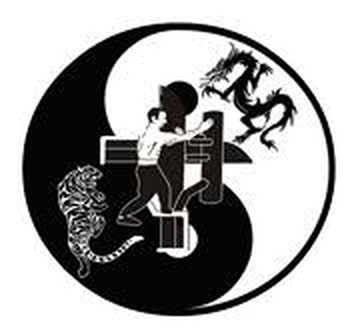
Kung Fu vs Wing Chun: what is the difference?
Wing Chun is a specific Chinese martial art within the broader Kung Fu tradition. “Kung Fu” is not one single fighting style. In English-language martial-arts usage, it commonly acts as an umbrella term for many Chinese systems. Comparing Kung Fu with Wing Chun is therefore closer to comparing a category with one member of that category.
Wing Chun has its own forms, training methods, principles and teaching lineages. Other Chinese martial arts may use very different movement, ranges, weapons or competition formats while still being described as Kung Fu. Spellings such as “Gung Fu” reflect different systems of rendering Chinese words into English rather than a separate martial art.
Wing Chun is often associated with direct actions and close distance. Students learn to organise their stance, hands and footwork so that movements support one another. The objective is not simply to memorise techniques. It is to improve the ability to recognise distance and pressure, maintain balance and make appropriate decisions while another person is moving.

Core Wing Chun principles
Terminology and emphasis vary between schools, but the following ideas are widely useful for understanding how Wing Chun is taught.
Centreline theory
The centreline is a practical reference for protecting central targets and finding direct paths between two people. It helps students think about position rather than chasing hands.
Economy of movement
Wing Chun favours purposeful actions without unnecessary wind-up. Economy does not mean rushing; it means choosing movements that suit the distance and task.
Structure and balance
A well-organised stance connects the body to the ground while allowing movement. Students learn to maintain posture and recover when their position changes.
Defence and attack together
Some Wing Chun actions protect a line while creating an immediate response. Whether both occur at precisely the same time depends on the situation and the drill.
Sensitivity and responsiveness
Contact drills help students notice direction and pressure through touch. The aim is to respond to information rather than perform a fixed sequence regardless of what changes.
Footwork, angles and position
Hands do not work alone. Stepping, turning and changing angle can improve balance, manage distance and reduce the force that must be met directly.
Relaxation and controlled power
Excess tension can slow movement and reduce sensitivity. Training develops the ability to stay composed while using appropriate muscular effort and connected body mechanics.
Distance and timing
A technically neat action used too early, too late or from the wrong range may fail. Partner training develops judgement about when and where movement is useful.
How Wing Chun is practised
Solo forms
Siu Nim Tao, often translated as “little idea” or “little thought”, introduces foundational hand actions, alignment and attention while the practitioner remains mostly stationary. Chum Kiu, commonly translated as “seeking the bridge”, brings turning, stepping and coordinated movement into the practice. Biu Jee, associated with “thrusting fingers”, is an advanced form that explores recovery, angles and actions outside the most basic positions. Translations and interpretations differ between lineages.
Partner training
Chi Sao, or “sticking hands”, is a family of contact exercises used to develop sensitivity, positioning and the ability to respond to and counter applied forces at close range. It is a training method, not a complete substitute for other partner work. Structured drills, pad or bag work, controlled sparring and other forms of appropriate resistance help place skills in changing conditions.
Equipment and advanced methods
The Muk Yan Jong, or wooden dummy, provides a stable training frame for practising position, footwork, angles and connected sequences. Conditioning and footwork exercises support the technical curriculum. Traditional advanced training may also include the Baat Jaam Do (butterfly swords) and Luk Dim Boon Kwan (long pole). These weapons methods are studied for their traditional and technical value under qualified instruction; they are not beginner self-defence shortcuts.

What does “Traditional Wing Chun” mean here?
Wing Chun has developed through multiple lineages, each with its own terminology, curriculum and interpretation. Wing Chun Universe teaches the Traditional Wing Chun system transmitted through Grandmaster William Cheung to Grandmaster Joe Sayah. “Traditional Wing Chun” is therefore the name of this teaching lineage, not a claim that every Wing Chun school must use the same method or historical account.
Readers can explore how this teaching relationship connects Yip Man, William Cheung, Joe Sayah and the current academy leaders on Our Wing Chun Lineage.
Wing Chun and self-defence
Consistent training can develop awareness, coordination, balance, confidence and practical martial skills. It cannot guarantee safety. Outcomes depend on the quality and realism of training, the people involved, the environment, physical condition, judgement and many other factors.
Responsible self-defence begins before physical contact where possible. Awareness, avoidance, de-escalation and leaving danger safely matter. Technical training should be progressive and supervised, with enough variation and resistance to test decision-making without treating injury as proof of authenticity.
Who can learn Wing Chun?
Beginners can start without previous martial arts experience. Children, teenagers and adults may all train, but appropriate class content, pace and contact level should reflect the student’s age, experience and individual needs. No single martial art is automatically suitable for every person.
A useful first step is to speak with a local instructor about the current programme and observe how beginners are taught. The four Wing Chun Universe academies manage their own classes and enquiries.